Story craft
How to Write a Comic Short Story in One Page
Build a short story around one goal, one obstacle, and a visible decision before you plan the panels.
Start with a change the reader can see
A short comic needs a small, complete change. Before writing dialogue, finish this sentence: “Someone wants something, a problem interrupts them, and they make a choice.” Keep the goal concrete enough to draw. Finding a missing key is easier to show on one page than finding meaning in life.
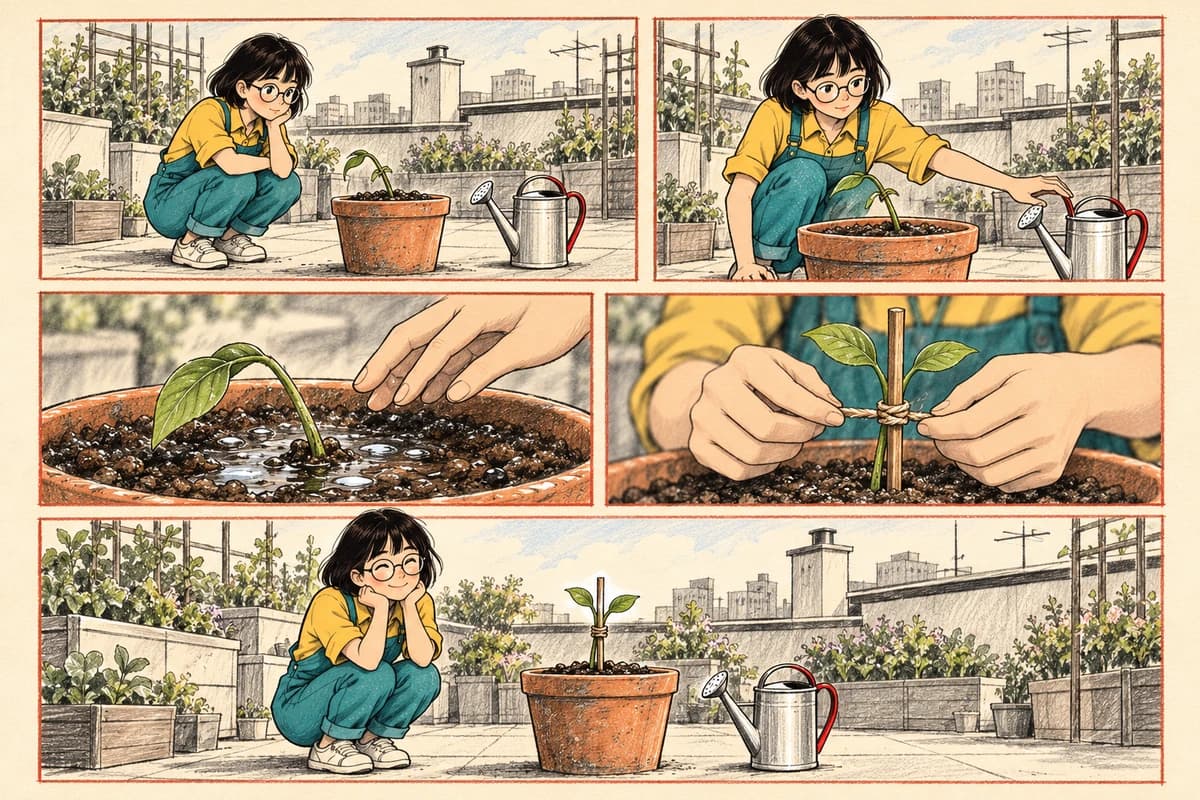
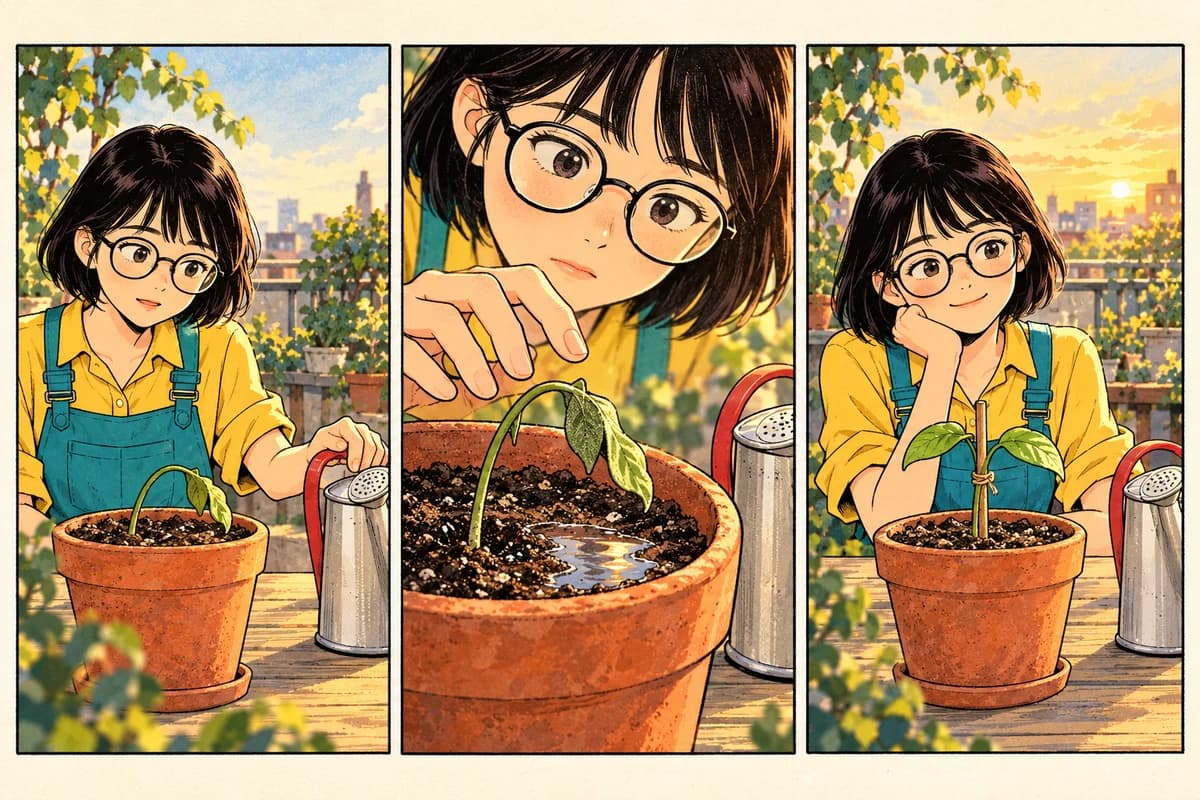
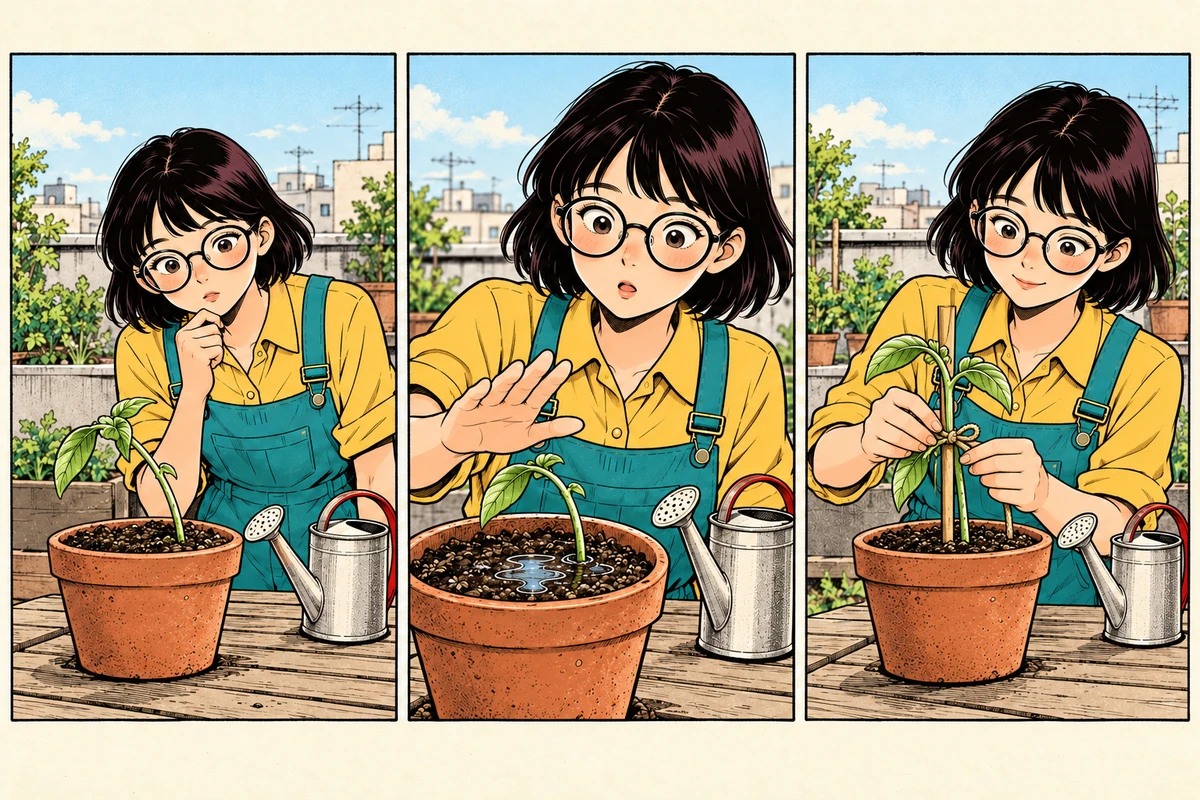
For a working example, imagine Mina tending a rooftop garden. She wants to help a leaning seedling. She first reaches for her watering can, notices that the soil is already wet, and chooses to support the stem instead. The ending shows the seedling upright. This is an invented script exercise; your illustration does not need to copy the article's artwork.
Give the character a useful constraint
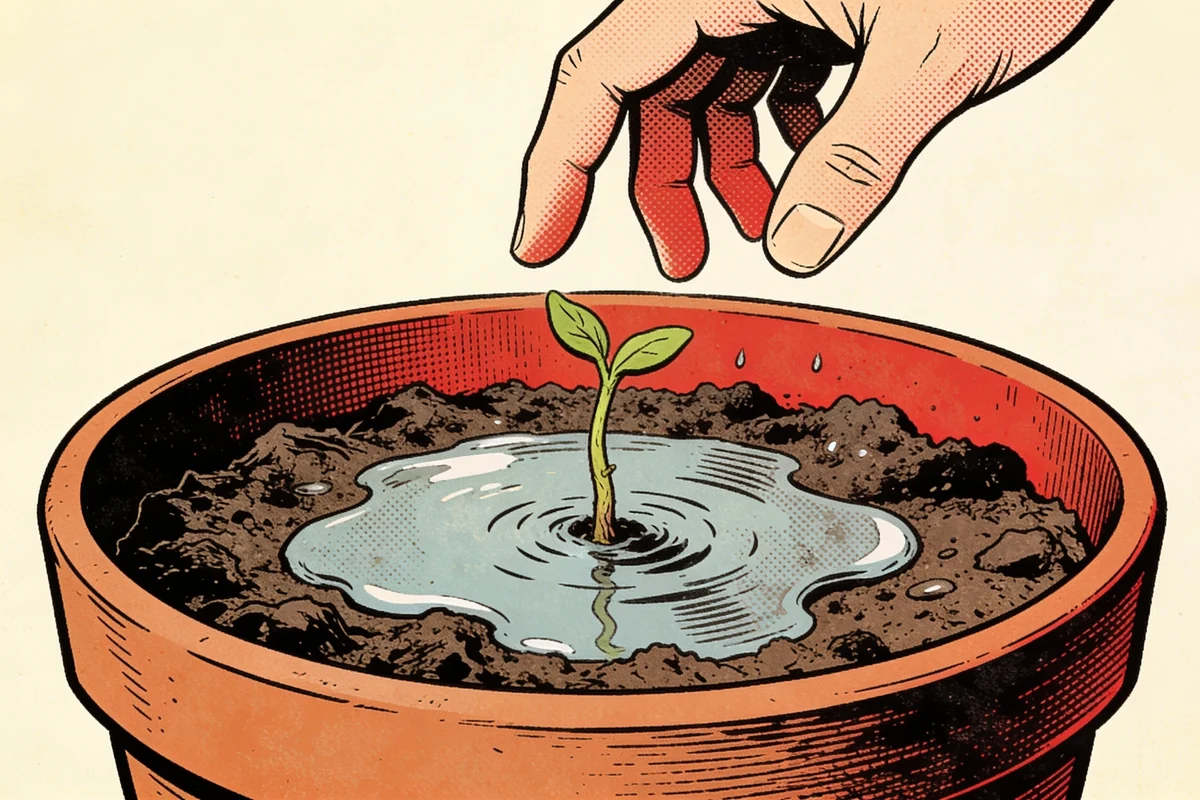
Write three short notes: what the character wants, what they initially misunderstand, and what they notice that changes their approach. Mina wants to help immediately, assumes more water will help, then sees the puddle around the stem. That observation earns the ending. A surprise solution with no earlier clue can feel arbitrary.
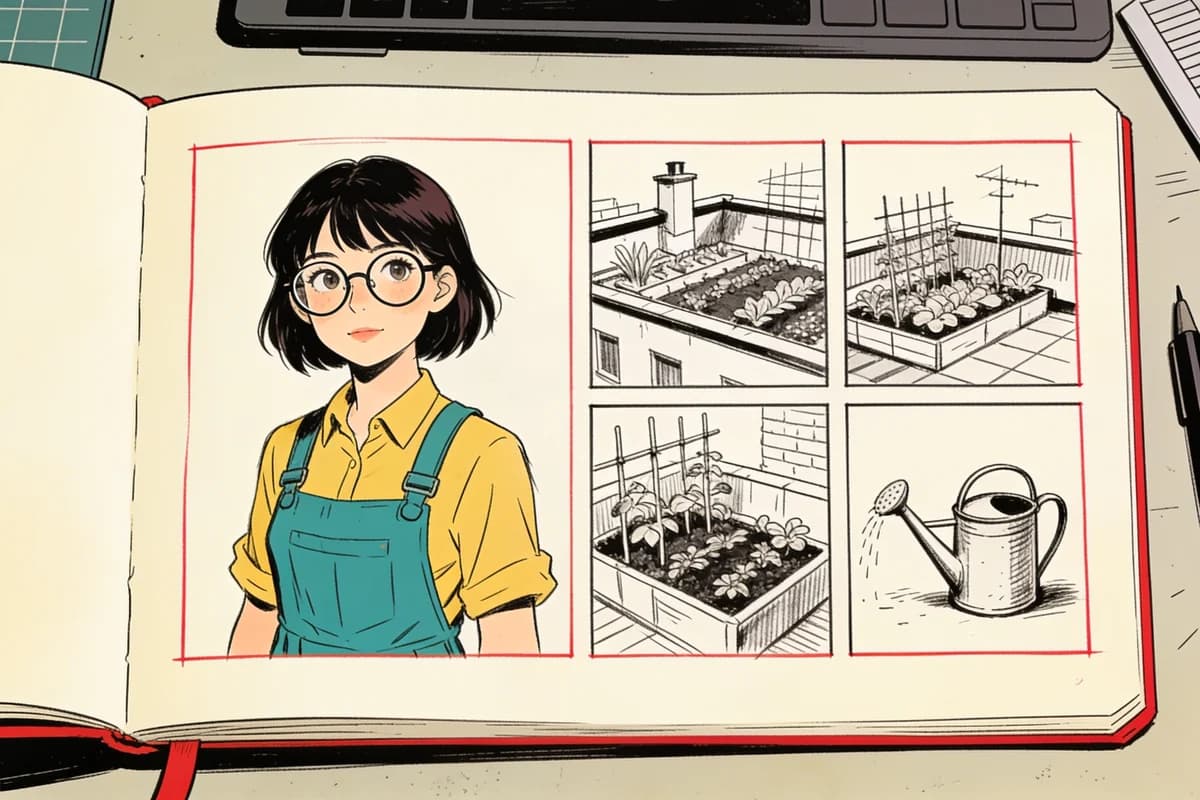
Add only the character details you will need repeatedly: short dark hair, round glasses, a yellow shirt, and teal overalls. Keep a separate note for the watering can and the seedling's pot. These details help you describe consistent images later; a long biography will not resolve a confusing action.
Write four beats before writing four panels
A beat is a meaningful change in the story, not a camera instruction. Draft the beats in plain language:
Mina notices the seedling leaning over.
She reaches for the watering can.
She notices wet soil and pauses.
She adds a small support and steps back.
Now check causality. The pause happens because she notices the soil. The support follows because she changes her plan. If two beats could swap places without affecting the story, ask whether one is unnecessary or whether a missing cause needs to be shown.
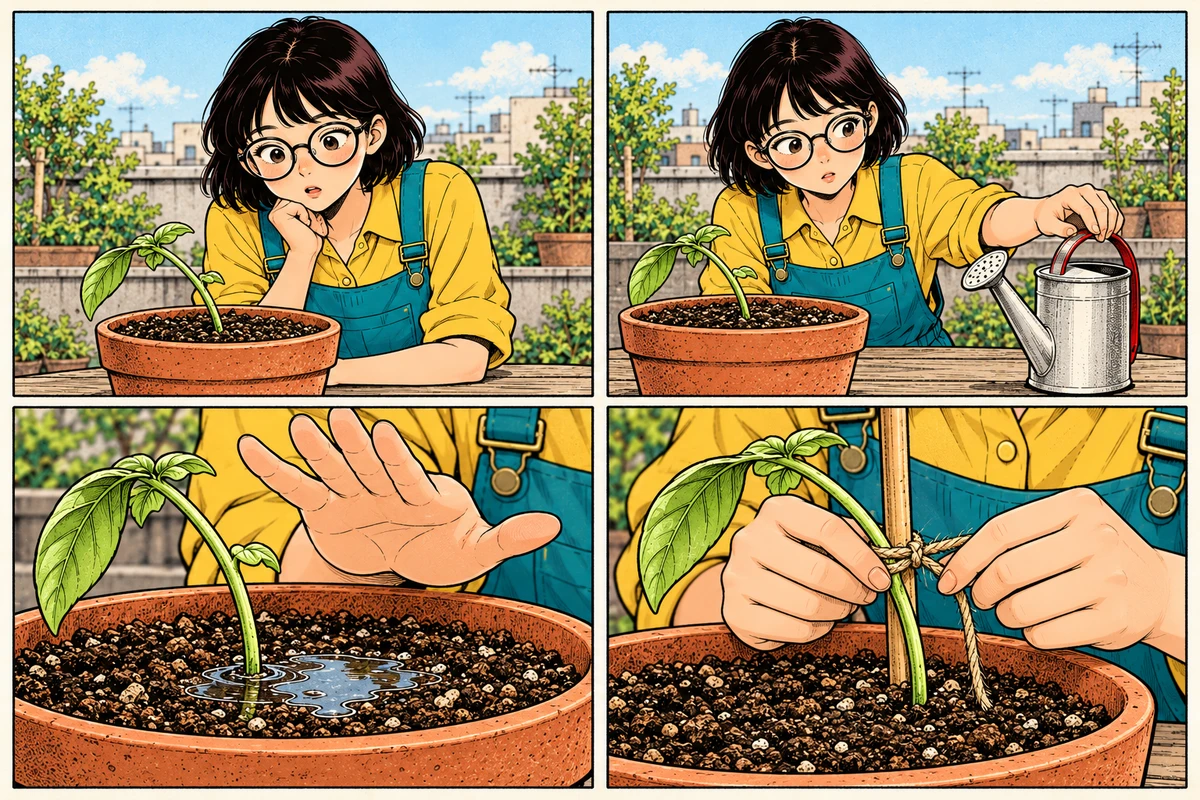
The fourth beat contains two actions. It may need two panels: placing the support, then looking at the result. Let the story determine the panel count instead of forcing every beat into one crowded image.
Separate what is drawn from what is said
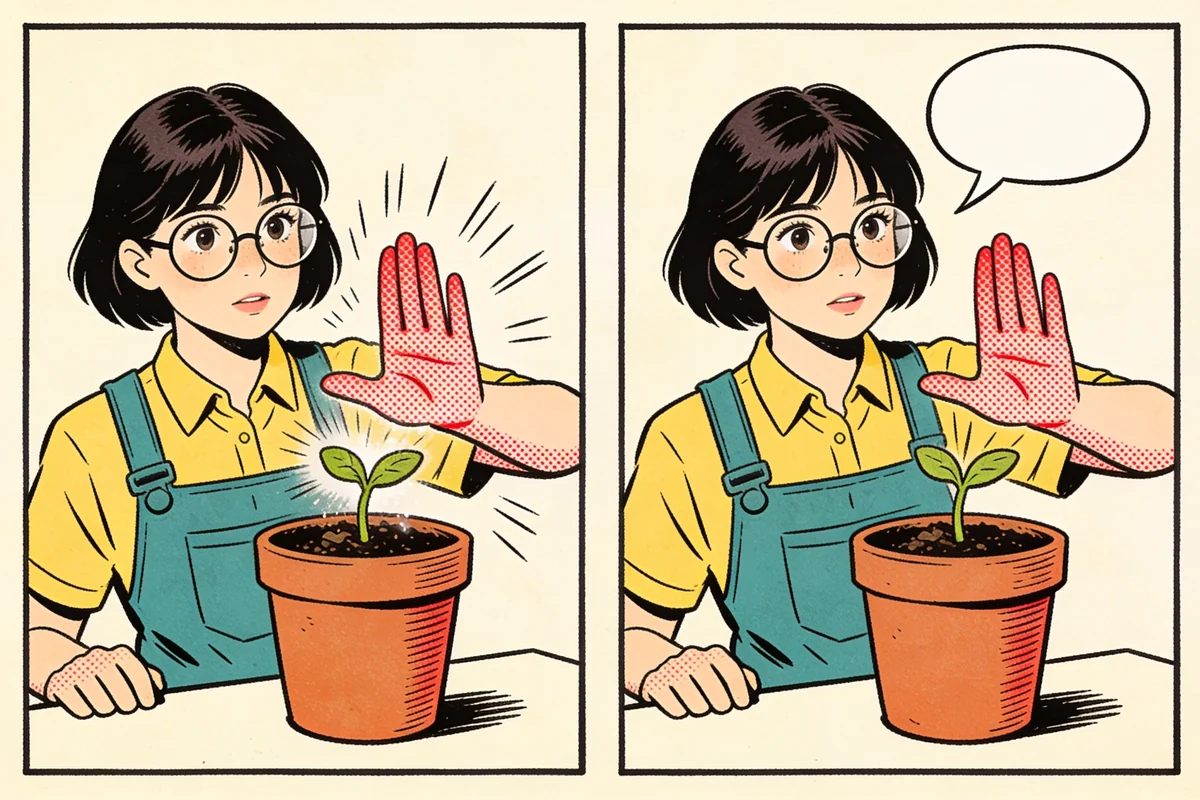
For each beat, write an image note and a dialogue note. “Mina's hand stops above the wet pot” describes a drawable moment. “Mina learns to be patient” describes an idea that needs visible evidence. Her hand, gaze, and next choice can communicate it.
Try a single line, “Wait… it already has enough.” Then read the scene without that line. If the pictures still explain the choice, the dialogue can add personality instead of repeating everything the reader sees. Save the exact lettering for page composition, where you can judge bubble size and reading order.
Review the script before making images
Read the story aloud once, then review it silently as a sequence of pictures. Use this checklist:
Can a reader identify the character's immediate goal?
Is the obstacle visible rather than explained only in narration?
Does the character's choice cause the ending?
Does each image note focus on one main action?
Can any repeated explanation be removed from the dialogue?
In KOMI, use the story and character notes to begin, then review the editable storyboard before confirming shots. Model choice belongs with image generation after the scene is clear. Continue with a practical plan for panel rhythm and continuity, or follow the full story-to-export walkthrough.
Common questions about writing a comic short story
How many panels should a one-page comic have?
Four to six is a workable range for a first page: enough room for a goal, an obstacle, a choice and a result, without crowding the lettering.
Should I write the dialogue before the images?
Write the beats first, then an image note and a dialogue note for each beat. Deciding the exact wording early is fine, but keep the two notes separate so a weak image is not hidden by strong dialogue.