

Thanksgiving comics · KOMI

Thanksgiving Comic Maker for the People at Your Table

An extra chair. A recipe passed between friends. A thank-you that is easier to show than say. Turn one small act of care into a comic about the people who make a place feel like home.

Make room for your next story

Choose a story starter · replaces your draft
0 / 10,000

Your text carries into the editor. Sign in to choose references, a model and a credit quote before generating.

Thanksgiving comics
Visual studyThanksgiving comics

Review the credit cost before generating, then choose how to create. Pricing

More control over the story you want to tell

Storyboard notes
  1. 01An extra chair at the table
  2. 02Friends prepare the meal together
  3. 03A neighbor hesitates at the door
  4. 04The chair becomes a welcome
Planning example · not a generated result
01 / Thanksgiving comics

Show gratitude through an action

Pulling out a chair, saving a slice or helping with dishes is visible. Start with one of those gestures and explain who it matters to. The comic gains an event instead of a table full of people giving speeches.

Explore this format
Reference review
Doorway welcome · room for one more
  • Face and silhouette
  • Outfit and props
  • Lighting and color
Compare before reusing
02 / Thanksgiving comics

Give each person a clear place

For a group meal, note who sits beside whom and which person is reacting. Use a wide shot to establish the table, then smaller pairings for conversation. Review faces and clothing instead of assuming a group stays consistent automatically.

Explore this format
Storyboard notes
  1. 01An extra chair at the table
  2. 02Friends prepare the meal together
  3. 03A neighbor hesitates at the door
  4. 04The chair becomes a welcome
Planning example · not a generated result
03 / Thanksgiving comics

Let one shared dish connect the shots

Follow a pie from preparation to the table. Repeat the dish shape and a simple decorative mark, changing only the stage of preparation. That gives kitchen close-ups and dinner scenes a concrete thread.

Explore this format
Leave space for the words
Editable dialogue
Artwork layer

The chair becomes a welcome

Planning example · not a generated result
04 / Thanksgiving comics

Make the thank-you your own

Replace a general slogan with a specific memory: the borrowed recipe, the spare room or the person who always checks in. Keep that sentence editable and place it after the gesture has already told the story.

Explore this format

One idea. More ways to bring it to life.

01

A Friendsgiving welcome story

Use the extra chair as both the opening question and the final answer. A small change in who belongs at the table can carry the whole short.

Explore this format
02

A kitchen mishap with a kind ending

A cracked pie or flour-covered sleeve gives the scene motion. Let people solve the problem together instead of introducing a villain or a dramatic disaster.

Explore this format
03

A thank-you comic for a friend

Choose one real act of support and show its effect. The last line can be simple when the earlier panels have already made the reason clear.

Explore this format
04

A family-recipe memory

Bring a memory into the present through the same bowl, pie dish or handwritten card. Mark the time change clearly in the storyboard so the reader can follow it.

Explore this format
05

An autumn slice-of-life episode

Let recurring characters prepare the meal together. A new seat at the table or a quiet cleanup can deepen their relationships without changing the main series plot.

Explore this format

From the first idea to a page worth sharing

  1. Story brief
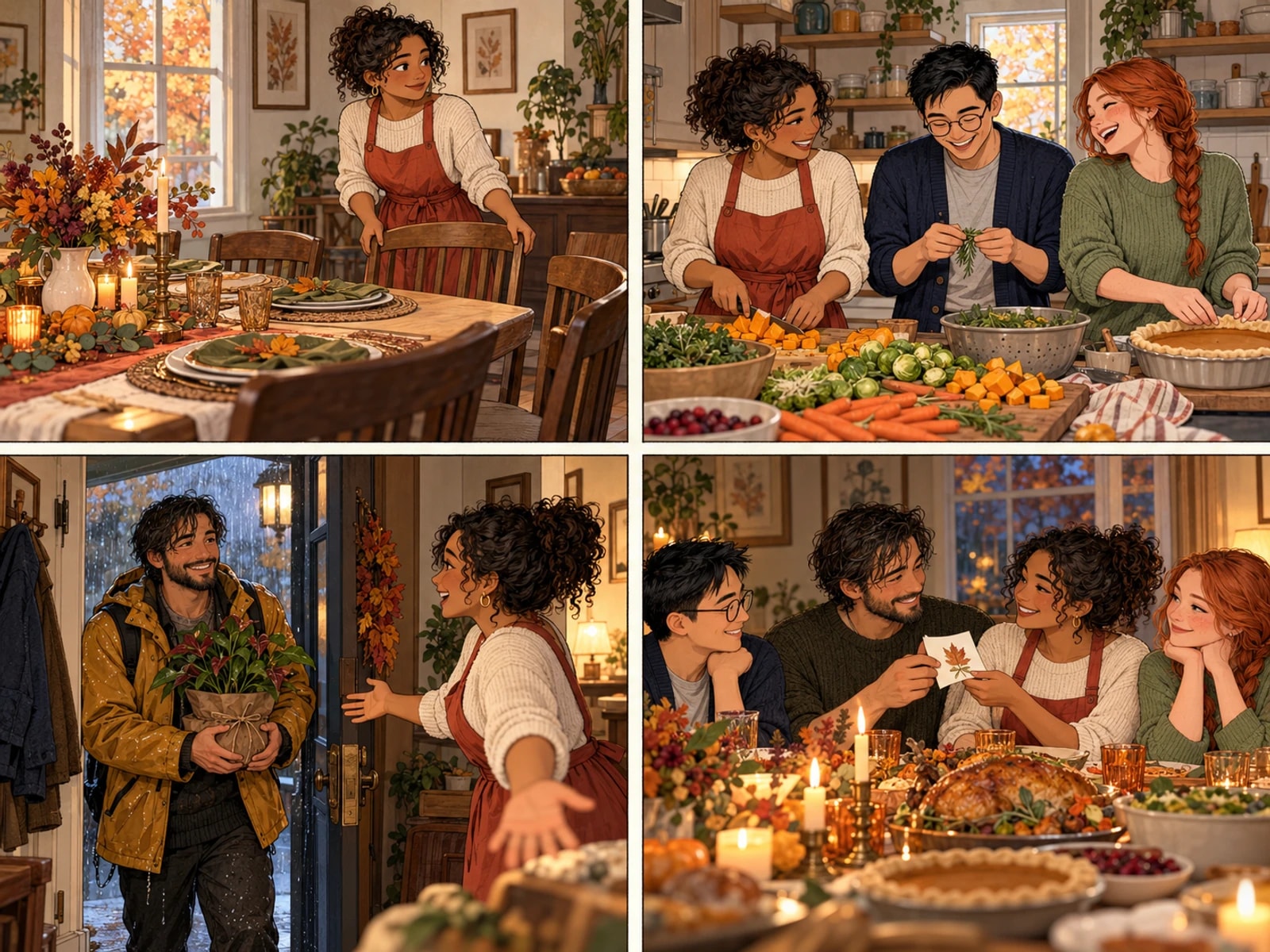
    A contemporary Friendsgiving comic in four story beats. An adult host with dark curls and a terracotta apron sets a table and hesitates over an extra chair. Two adult friends help prepare vegetables and a pie in her small kitchen. A neighbor arrives at the door in a wet mustard jacket, carrying a potted plant and unsure whether to come in. The host pulls out the extra chair. End with the four adults sharing a meal and a small gratitude card. Keep the chair as the visual thread and show thanks through gestures, not a speech.
    Planning example · not a generated result
    01

    Shape the idea

    Describe a scene, import your manuscript in the editor, or define a character. Add the references that matter to your story.

  2. Storyboard notes
    1. 01An extra chair at the table
    2. 02Friends prepare the meal together
    3. 03A neighbor hesitates at the door
    4. 04The chair becomes a welcome
    Planning example · not a generated result
    02

    Direct the shots

    Review the storyboard, choose a model and check the quote. Generate and compare panels; retry the ones that need another pass.

  3. Page plan
    1. 01An extra chair at the table
    2. 02Friends prepare the meal together
    3. 03A neighbor hesitates at the door
    4. 04The chair becomes a welcome
    Planning example · not a generated result
    03

    Make it a page

    Arrange the approved artwork, edit bubbles and text, and preview the finished page before exporting. Character references can be reused in a project.

Made for creators who keep creating

Keep your direction

Edit shot order, action and dialogue before committing to the final artwork.

Refine one panel

Try another candidate for a shot while keeping the panels you already approved.

Bring your cast back

Choose a reference version for each project or shot, then review the result for continuity.

Words stay editable

Adjust dialogue, bubble shapes and placement without regenerating the underlying artwork.

A few details that make a better page

A table scene still needs a change

A group portrait records who attended; a comic shows what changed. Decide whether a guest moves from hesitation to belonging, a cook stops chasing perfection or somebody finally accepts help. Give that change a visible action, then use a reaction shot to let the other person respond.

These starters focus on contemporary personal gatherings, not a historical account of the holiday. Adapt the people, food and setting to your own experience. In a group shot, identify the focal person and keep table props from hiding faces; add concise dialogue after the image has room for it.

Story focus
One act of care and the person it reaches
Group staging
Establish the table; follow one reaction
Useful continuity prop
An extra chair, the same pie dish or a leaf card

Thanksgiving comics · Questions

What makes a Thanksgiving comic different from a dinner picture?

Give the gathering a change: somebody is welcomed, help is accepted or a quiet thank-you is noticed. Show the moment before and after that action. Food and decorations support the story instead of becoming the whole subject.

Can I make a Friendsgiving comic instead of a family story?

Yes. The extra-chair starter already centers a contemporary gathering of adult friends and a neighbor. Replace their details with your own cast, shared routines and the small gesture you want to remember.

How many characters should I put in one panel?

There is no universal count. A wide establishing shot can introduce the group, but emotional beats are easier to read with one or two focal people. Review who is speaking, who is listening and whether table objects cover faces.

Can I include a real recipe or thank-you message?

Describe its role in the story, then add exact words through editable dialogue or lettering in the creator. Check names and ingredient spellings yourself. The artwork studies use a leaf mark rather than claiming readable generated handwriting.

Do these templates recreate the history of Thanksgiving?

No. They are fictional contemporary stories about friendship, food and gratitude. For a historical or educational comic, bring your own researched source text and verify the resulting storyboard against those sources.

What carries into the creator, and when do credits apply?

Your edited story text carries into project creation. Images and settings are chosen there, not attached from this page. Selecting or editing a starter calls no model; review the quote for story analysis or image generation before confirming that action.

Before you begin

  • It does not generate a whole chapter at once: one page at a time, frame by frame, so nothing needs a full redo.
  • It does not train models: generation uses the server catalog's models and versioned prompts, never personal training.
  • It does not bypass content policy: models may refuse a prompt, and refused tasks refund their credits.

Your next page starts with an idea.

Start small. Shape the shots. Make something you want to share.

Create a comic

Updated